Connected Librarians: Eyes Wide Open & America Recycles Day

2global

One of my goals this year in our library is to foster global thinking and global collaboration.  To connect with these types of opportunities for our students, I seek out connections on Twitter as well as in Google Plus communities such as GlobalTL and Connected Classrooms.  I also offer opportunities within the projects taking place in my own school for other people around the world to join in.

This summer, I became involved in a conversation with Joyce Valenza, Shannon Miller, and Paul Fleischman about how books could live beyond the closing of the cover.  What if a book inspired us to take action in the world?  What would those actions look like around the globe?  How could they be documented?  How could they be shared? What would it look like if the author engaged in conversations about the actions being inspired by the book?

This September, Paul Fleischman’s book Eyes Wide Open: Going Beyond the Environmental Headlines was published.  It’s a different kind of book because it doesn’t give our young people a prescriptive list of answers to solve the environmental problems of the world but instead to take an inquiry stance.  It inspires our young people to listen closely to the environmental stories being shared about our world and to uncover stories of their own.  It calls our young people to take action on those world problems and realize that even at a young age they can make a difference in our world.

Joyce Valenza wrote a great post about the book.  In it, she included Paul’s voice about his book.

About Eyes WIDE Open:

Paul Fleischman 300x225 Eyes Wide Open: A proof of concept for sustaining the conversation around booksWe’re living in an Ah-Ha moment. Take 250 years of human ingenuity. Add abundant fossil fuels. The result: a population and lifestyle never before seen. The downsides weren’t visible for centuries, but now they are. Suddenly everything needs rethinking–suburbs, cars, fast food, cheap prices. It’s a changed world.

Eyes Wide Open explains it. Not with isolated facts, but the principles driving attitudes and events, from vested interests to denial to big-country syndrome. Because money and human behavior are as important as molecules in the environment, science is joined with politics, history, and psychology to give altitude on this unprecedented turning point. It’s a time of bold advances and shameful retreats, apathy and stunning innovation.

What better time to have our eyes wide open?

An Eyes Wide Open Google Plus Community has been established to make connections for global collaboration around the book.  Paul Fleischman has also created a site to house headlines, projects, and conversations about the book.  He wants this to be more than a book that you read and close, but instead for it to be a book that inspires action in the world.

Also from Joyce’s blog, there’s a great list of ideas of how you might use Paul’s book with students.

What sort of reports might students contribute?
  • Take photos (and create a gallery) that document population rise or consumption levels or innovations being used to address these challenges.  Attempt to document how your eggs, milk, farmed fish, and meat are made.
  • Make a video describing a local citizen science project.  Document a plastic bag banning campaign, a local pollution issue, or your own attempt to go vegan for 30 days.
  • Interview someone in city government connected with water, transit, city planning, or emergency services.  Or a biologist, park ranger, or science teacher.  Or a religious leader whose church has taken a stand on the environment.  Or your state senator, state assembly representative, or an aide to your congressperson.  Or fellow students or neighbors to get a sense of how average citizens view the situation.  Google+ Hangouts might be a perfect venue for archiving these interviews!
  • Write a description of one of your area’s key issues and how it’s being dealt with.  Join with one or two others, each tackling one part of the project: research, interviewing, editing.  Would your local newspaper be interested in the result?
  • Do a survey of your city, finding out where your water comes from, how your electricity is made, where your trash goes.  Prepare to make many phone calls and to ask follow-up questions.  More fun with a friend.
  • Annotate local newspaper stories, adding commentary that lets us see how the global trends and mental habits described in the book are playing out locally.  Feel free to refine my thinking.
  • Remix media and create digital stories around an area of local interest.
  • Inspire a meme to invite continual, global reinterpretation around an environmental prompt
  • Submit a field report. Work prepared for school assignment is fine.  Take time to review and revise.  Once you’ve posted it on Google Docs, YouTube, or another platform that all can access, send a description to [email protected].  Include a bit about yourself, how you came to the topic, and a photo of yourself or something connected to the report.  If Paul finds it well done, he will add it to the roster, put a pin in the map, and maybe even give it a shout out in his blog.

birds3

Connected librarians have a huge opportunity with this book and the many communities that are available to us.  We are the people within our buildings who work with every student, teacher, and family member within our school.  If we collaborate, then we connect our entire school communities with one another.

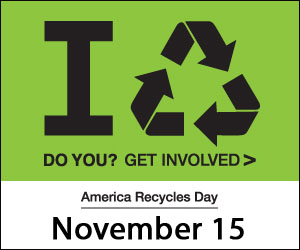
November 15 is America Recycles Day.  The week of November 10-14 would be a great week for us to begin to connect our voices with one another around an issue that really affects us globally.  Paul’s amazing book Eyes Wide Open could be a piece that we could use to spark conversations around the globe.  It could also be paired with a plethora of other picture books and informational texts on environmental action.  More than a conversation, our connections could push our young students to take action in our world, and those initial connections could lead to a continued connection between schools around the world in the name of environmental action.
Here’s what I hope to do:

  • Connect with schools throughout the week of November 10-14 via Skype or Google Hangouts
  • Read an environmental text together
  • Have each school identify and explain an environmental issue in our school or community.  For us, it will most likely be the amount of waste being thrown away in our classrooms.
  • Have each school exchange their issue and brainstorm possible next steps for one another.  Wouldn’t it be nice to hand your problem over to someone for a few minutes to see the problem through their eyes?  That perspective might be the very thing you need in order to take a next step in your problem.
  • Share our brainstorming with one another and document suggestions in a digital format such as a Google doc or Padlet.
  • Commit to reconnect at some point to share what actions we have taken, what has been successful, or what new problems have surfaced.

I invite you to connect with my students and also to post your own schedules and find your own connections via this Google Doc.

http://bit.ly/americarecycles14

Let’s do more than just connect our students for a day.  Let’s connect our students to work on an issue that has an impact on our world.  As part of Connected Educators Month, let’s start thinking of how we can connect our students in meaningful ways throughout the year and begin planning those connections now.

As you make connections, create action steps, and make an impact on your world, share it!

Eyes Wide Open hashtag: #ewopf

America Recycles hashtag: #americarecyclesday

GlobalTL hashtag: #globalTL

and don’t forget #tlchat

Talk Like a Pirate Day 2014

Our pirate map of connections

Our pirate map of connections

September 19th is Talk Like a Pirate Day.  There are so many fun pirate stories out there, and each year we seem to discover a few more thanks to the connections we make around the globe through Google Hangouts and Skype.  Planning a day of connections like this definitely takes some time but students love talking with people around the globe, sharing a story, and learning a bit about one another.  It always seems to reinforce the idea that we aren’t alone in our bubble of routines of day to day life.  There are other people out there doing the same things that we are and quite possibly they are doing those things in different ways.  I love the spontaneous conversations that take place on days like this that you could never plan through a standard or a lesson plan.  Students always bring up a question or a comment that makes the day special.

This year, 8 classes came to the library for Talk Like a Pirate Day and we connected with 6 different schools in 5 different states.

  • We connected with Edie Crook in Gastonia North Carolina to read the book No Pirates Allowed Said Library Lou.  We had a great conversation about “treasure” and students took turns stepping up to say what treasure meant to them.  We were delighted with words such as being kind, family, friends, Skylanders, and baseball.
  • We connected with Jan Pelias through Google Hangouts in Frisco Texas to read the book How I Became a Pirate.  It was fun to connect with someone in another time zone because we could talk about how time is different at the same moment around the world.
  • We connected with Melanie Thompson in Jefferson City, Missouri to read the book How I Became a Pirate.  Melanie’s students had researched pirates and they took time to share all of their facts.  This made our students very curious about pirates as well.  I have a feeling all of our nonfiction pirate books will be checked out for a long time.  I also love how Melanie embraced her inner pirate as we chatted with each other through Skype chat prior to our connection!

Pirates (11)

  • We connected with Okle Miller in Tampa, Florida to read the book No Pirates Allowed Said Library Lou.  Tampa has a pirate festival called Gasparilla .  Students loved hearing how pirates take over Tampa during this festival and kidnap the mayor (all for fun).  The class we connected with even called themselves pirates and used the word “pirate” as an acronym for their classroom expectations and beliefs.
  • Both of our PreK classes came to the library for their first visit of the year.  In class, they made pirate hats and hooks as well as added some pirate mustaches to their faces.  We read the book Pirates Go to School and made a class video chanting the pirate chant at the end of the book.
  • We connected with Carol Scrimgeour in Essex Town, Vermont to read the book No Pirates Allowed Said Library Lou.  We noticed that all of the kids were wearing warm clothes, so we had a great conversation about how cold it had been in the northeast.  It was sunny in both places but with a very different temperature.
  • Finally, we connected with Shawna Ford in Texas and she read a new pirate book we had not heard before: No Bath No Cake Polly’s Pirate Party.  Now the students want to get it for our library.

Before each connection, we looked at a map from our school to the school we were connecting with.  We talked about distance, travel time, and also all of the decisions that go into choosing your route for a trip.  We also created a Google tour of our trip using Google Tour Builder.  After each connection, we wrote a summary together.

We also created a Padlet to write pirate sentences.  This was shared with our friends around the country and became a place to crowdsource our words.

Finally, we spent a lot of time creating pirate sentences, phrases, and even conversations and practicing them aloud.  Students had access to a list of pirate vocabulary words as well as multiple pirate stories to get ideas.

We used Flipgrid as a place to record our favorite pirate expressions.  Students also had a great time trying to imitate a pirate voice and pirate faces and gestures.  Take a moment to listen to them because they are quite entertaining!  I loved how this evolved from a sentence writing activity into a practice of fluency, oral speaking, and performance.  Again, Flipgrid became a place for us to crowdsource our voices with the voices of our connecting schools.

I love how these events connect us with new people around the world.  This year we connected with some old friends, but we also met some new teachers, librarians, and students we hope to connect with again.  I also want to continue to think about days like this to build long term collaborative relationships.

Making Our Mark with Dot Day 2014 (and I hope well beyond)

Dot Day (42)

International Dot Day is one of our favorite days (weeks) of the year.  It gives us permission to be creative and see what we can do just by making a mark.  It also connects us with so many classrooms around the world.  Classes are always looking to connect on this day, and we have made many collaborative relationships with schools because of this one day of the year.

This year, we used Dot Day as a way to explore our goal of dreaming, tinkering, creating, and sharing.  We explored Google Drawing, which was a new tool for most students.  We used Dot Day as a time to tinker and see how Google Drawing functioned as well as how to collaborate on a drawing with another student or class.

We also used colAR mix again this year to make augmented reality dots.  This year, I encouraged students to think more globally as they made their dots by embracing the them of “making your mark on the world” that is the essence of The Dot.  Students were encouraged to design a dot that represented their talents, hopes, dreams, and passions.  I loved this new twist on a tool that we used last year because it revealed so many stories from students.  One student drew a picture of an airplane flying through the clouds because of his dream to be a pilot when he grows up.  Another student drew an astronaut and UFOs because of his desire to explore space.  Another drew her whole family because they are what she loves in life.  Some students chose to highlight their creativity as a way that they make their mark by designing unusual dots with their favorite colors.  These were empowering stories because they allowed students to have a voice to share something personal about themselves in a way that they might now have shown before.

One amazing thing that happened while students were using the colAR app was how they discovered different ways to scan their dot. It started out as what some people might see as a mistake.  A student’s hand was on top of their dot while they were scanning their image, and the hand became a part of the rotating sphere on the iPad screen.  This resulted in an uproar of excitement as sharing began and the idea spread like wildfire.  Soon students were trying to put their faces on their spinning spheres.  Others stacked towers of crayons on top of their dot and tried to see if that would scan into the 3D image.  All of this happened because of an opportunity to tinker.  When we give kids a space to explore, they figure out amazing things and they willingly share and teach others what they learned.  They get excited about their learning and they want to do more.  I bet that these students would have spent an extended period of time continuing to experiment with colAR mix to see what else they could figure out, and they would have done this without getting tired or bored.  These are the things that days like Dot Day reveal.

We had numerous Skype connections.  Each one had its own unique twists and conversations between students and teachers.  In many of these Skypes, we collaborated on a Google Drawing dots after reading the book.  This included dots with our friend Okle Miller in Tampa, Edie Crook in North Carolina, and Crystal Hendrix in North Carolina (just to name a few).  Sometimes this was live during a Google Hangout or Skype and other times it was after we disconnected.  One of our hangouts was a large hangout between Matthew Winner in Maryland, Nancy Jo Lambert in Texas, Donna MacDonald in Vermont, and Esther Uribe in Texas.  It was fun to read The Dot to students in so many states at one time, but what was even more fun was drawing with all of them at the same time!  We definitely did some tinkering with this one.  Many of us learned of the challenges of younger students but found ways to involved them even with computer-use difficulties.  The students loved seeing drawings “magically” appear on our shared dot.

Ramsey & Winner Dot

Our multi-school collaborative dot

With Jennifer Reed in Massachusetts, we accidentally deleted all of our work on our collaborative dot.  The kids were in a panic, but it was a fantastic opportunity to do an impromptu lesson on the power of revision history in Google Drive.  We were able to recover our work and learn an important trick.  We even talked about how revision history is one way that work is never deleted, which can be a positive but also a negative if you have written something that you wished you hadn’t.

Wright & Reeder Dot

Our dot with Jennifer Reed that was almost lost!

Mrs. Clarke’s class had a Skype connection, but we weren’t able to do a collaborative dot with our connecting class.  Instead, we split the class in half at our 2 projection boards and they created a dot together as a class.  They got just a bit competitive as they tried to cover up each other’s work, but even this was a great opportunity to talk about how to work with others on a doc without being disrespectful of the contributions.

Clarke & Lussier Dot

Mrs. Clarke’s class competitive dot

Some classes that we connected with had already spent a great deal of time being creative, and they shared with us dots that they are going to physically mail to us.  Jenny Lussier in Connecticut had colAR dots as well as Morse code greeting cards.  We can’t wait to decode what they say!  We also discovered with Jenny that there’s more than one version of The Dot floating around out there.

Cathy Potter’s students in Maine read the book Ish to our students and shared their own illustrations for the book.  We had a great conversation about the connections between both books.

Dot Day (60)

Students and teachers alike love this day, but I do leave this day with a wondering.  I’m thinking so much this year about global thinking and global collaboration.  This day is filled with thousands of Skype and Google Hangout connections around the world.  We connect.  We read.  We dream.  We create.  But then what?  We leave one another until the next big event.  I’m by no means being negative about Dot Day.  I’m a huge advocate, but I do wonder about why we don’t build upon these connections we make.  If we are really going to “make our mark” on the world, shouldn’t we be taking some actions together beyond connecting, reading, and creating?  I would like to gently nudge us all to think about this.  I’m just as guilty.  I connect every year and then I move on, but I can’t help but carry this on my mind, reflect on it, and consider what more we might do beyond today.  Think with me!  Let’s keep our dots connected.

Dot Day (43)


September 11th: A Global Perspective

September 11 (3)

Each year our 5th graders take an entire day to explore the tragic events of September 11, 2001.  Each year, the students become more and more removed from the topic because they weren’t even born at the time of the tragedy.  The events of September 11 and the impact they had on our war on terrorism are part of the 5th grade social studies standards, but we also spend a great deal of time at our school on social emotional learning and how we support one another in a community.

September 11 (22)

Each year I write a blog post about how we teach September 11th, and each year there is a new addition or a new angle in which to explore the day.  This year, students opened the day in their classrooms by talking about everyday heroes.  They shared where their own families work and how each of us can be an everyday hero.

September 11 (17)

Then, students split into 4 groups and rotated through 4 experiences every 30 minutes which were facilitated by me and the classroom teachers.

Experience 1:  Haiku poetry.  With Ms. Mullins, students learned about the unlikely heroes of the day including dogs.  They studied the poetry form of haiku and how a brief 3-line poem with 17 syllables can magically express a feeling or an image.  They focused their haiku on heroes.  They didn’t have to specifically write about the heroes of 9/11, but many chose to.

September 11 (28)

Experience 2:  Response to tragedy from afar.  With Ms. Selleck, students looked at how people around the country and the world responded to the tragic events of 9/11.  It was a time that people wanted to take action and do something to help.  Children wrote letters, drew pictures, and made cards.  The Maasai people of Africa offered 14 cows as a gift for America.  Ms. Selleck shared Carmen Agra Deedy’s story 14 Cows of America and students considered how people who weren’t even in our country wanted to help.  This posed an interesting question of how we might respond to the tragedies taking place every day in other countries.

September 11 (20)

Experience 3:  Heroes of 9/11.  There were so many heroes that stepped forward on 9/11 and many of those heroes lost their lives in the process.  At this experience, students took a look at many example of heroes and read the story Fireboat by Maira Kalman.  Students learned about this old fireboat first launched in 1931 and how it was called to duty on 9/11 to help pump water to fight the fires.  Students designed a drawing to represent the many heroes that took action on 9/11.

Experience 4: The events of 9/11.  This is the most sensitive of the experiences for students because we all react differently to seeing the tragedy of 9/11.  Over the years, I’ve developed a pathfinder of sites that explore 9/11 from multiple angles.  There are interactive timelines, eyewitness accounts, actual video footage of the day, oral histories of memories from victims’ family members, virtual tours of the memorials, and cartoon videos explaining the events in kid-friendly language.  We start with a video:

This video frames that on 9/11 we remember but we also take action to create good in the world.  I invite students to view the various resources and reflect on what they might do to create good instead of evil.  At the bottom of the pathfinder there is a padlet where students can record their actions that they want to take.  During this experience, I always tell students that they don’t have to watch any of the videos.  They can also take a break at any moment if the tragedy just becomes too much to handle.

This year, 2 new pieces were added to this experience.  First, Gretchen Thomas, a UGA teacher in instructional technology, brought one of her #EDIT2000 classes to support students.  This was a piece that I’ve always felt was missing from the pathfinder experience.  September 11th is such a heavy topic, and I do worry about how kids are processing the information.  With these UGA students, we were able to pair every 5th grader with a UGA student to have reflective conversation about each website, video, and story that students experienced.  UGA students shared their own understanding of 9/11 as well as their own memories of being in elementary school when it happened.


I’ve also been thinking a lot about global thinking, global collaboration, and global perspectives.  This year, I decided to make a Flipgrid well in advance of today.  Through social media, I’ve been sharing the Flipgrid in the hopes that multiple people will share their own perspectives of 9/11.  While there wasn’t an overwhelming response to share stories, the stories that were shared were powerful.  The students in Gretchen Thomas’s class shared their own memories of being in elementary school at the time.  These stories included very personal connections to the tragedy such as family members who were in New York on the day of the tragedy and a student coming into New York on a plane from another country and being diverted to Canada.  Several librarians stepped up to share stories as well.  Beth Miller of Georgia shared her story of working in the World Trade Center during the bombing in the 1990’s and how she had family and friends who were in the towers on 9/11.  Her family made it but several friends did not.  Elissa Malespina of New Jersey shared the story of her husband being in New York on 9/11.  He was on one of the last trains coming into the city.  It was chilling to think how many people have been affected by 9/11 in very personal ways.  Even if you don’t have a personal connection, there are many stories about where people were when the tragedy happened.  I wish that I could talk about every story on this Flipgrid because each one is meaningful in its own way.  Please take time to listen to these stories and feel free to add your own.

September 11 (25)

This Flipgrid was a part of the pathfinder but it was also a place that students recorded their own thoughts at the end of the day.  Students spent some time reflecting in classrooms.  Then, they came out into the 5th grade hallway with iPads to record their reflections on the Flipgrid.  Another of Gretchen’s UGA classes came to assist with this process.  I had instructions typed up with the Flipgrid code and we got as many students recorded as possible at the end of the day.  Students loved collaborating with students from UGA to create their videos.

I think that this project has such potential for a global collaborative project.  What would it be like if students in another country shared the tragedies taking place in their own countries?  What would happen if our students in the  US considered how they could respond to the tragedies taking place in other countries?  What are people’s perspectives on 9/11 from other countries around the world?  What do everyday heroes look like around the globe?

My hope is that this project can continue in some way this year.  If it doesn’t, I hope that next year’s layer that gets added on is developing a more global perspective on tragedies around our world and how we respond to those tragedies as a global society.