Banding Together with Joyce Sidman and Heart Poems

IMG_2508.JPG

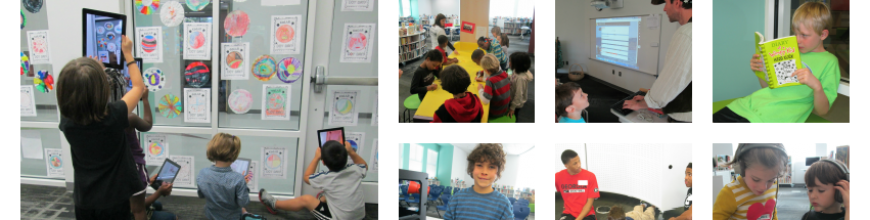
Our two schools are part of a wonderful project called “Banding Together”.  In partnership with In This Together Media, the Van Meter third graders kicked this off while working on their Rainbow Loom research projects.  After creating so many beautiful bracelets throughout the project, they wanted to do something special with all of these handmade creations.  They partnered with In This Together Media to bring these bracelets, happiness, and friendship to children from an orphanage in Mangalore, India.  The third graders decided to call the project “Banding Together” and the next step was bringing others onboard to make a difference in the world.

Shannon told Andy about “Banding Together” right away….Van Meter School couldn’t wait for Barrow Elementary to be partners with them too.  Together they would bring so much to the children in India….and to each other.

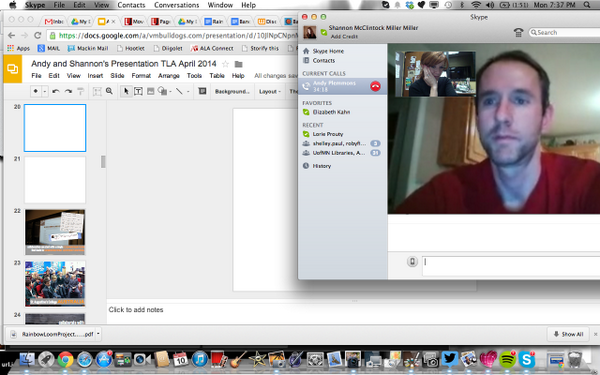
Recently during a Skype planning session, Andy brought up the idea of incorporating poetry into the Banding Together project.  It started with a wondering.  What if we added short poetry, like a fortune cookie slip, attached to the bracelets?  Shannon said, “Let’s go for it.” And the brainstorming began.
BiaKe2-CUAAXkYO.png

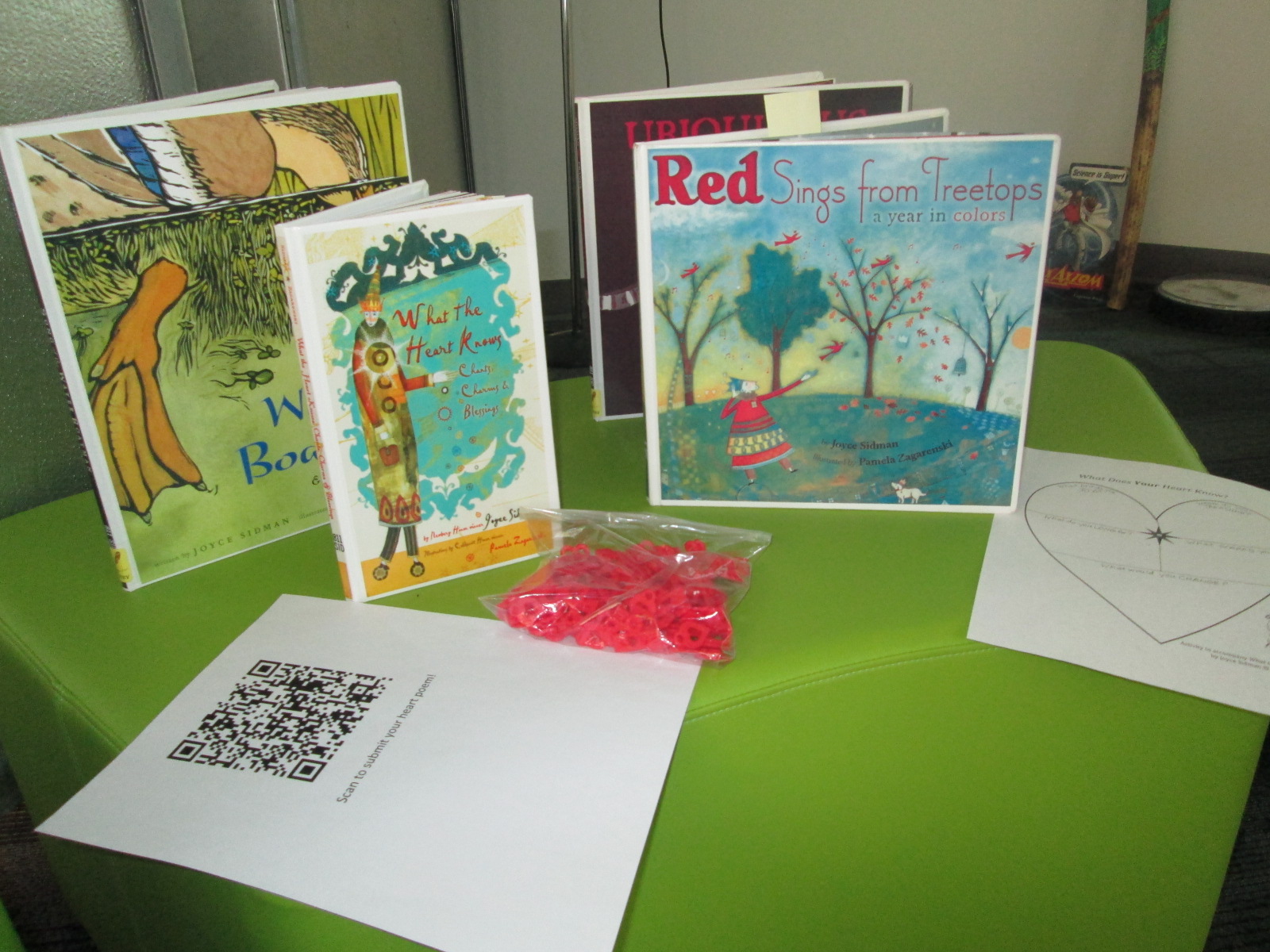
We both started thinking of possible titles for the short poetry.  We wanted the title to represent the spirit and joy of the Banding Together project.  In looking through poets, we thought of Joyce Sidman and her new book, What the Heart Knows:  Chants, Charms, & Blessings.  In her note to readers, Joyce Sidman writes, “We believe in the power of words themselves.  Why else would we pray, sing, or write?  Finding phrases to match the emotion inside us still brings an explosive, soaring joy.”

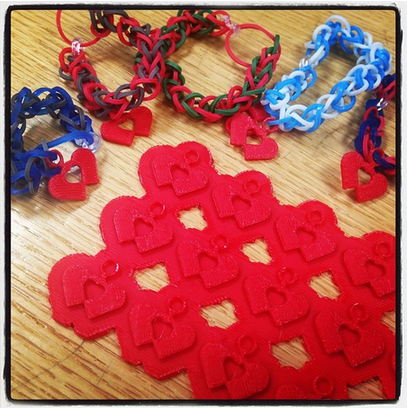
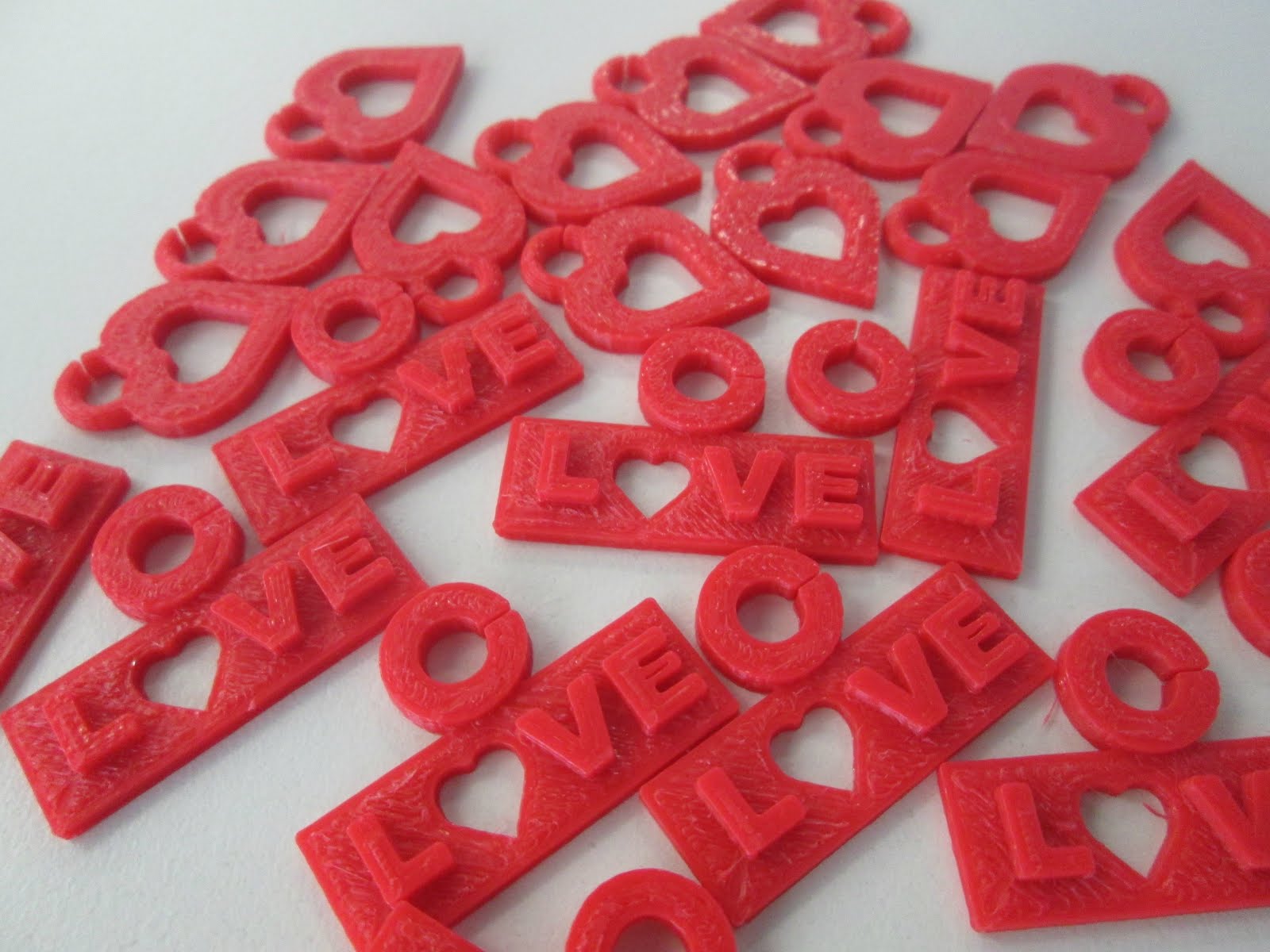
That idea of finding a phrase that matches the emotions in our hearts really connected with what we hoped the Banding Together poetry would represent.  Suddenly, we had a thought about our poems.  What if we called them “Heart Poems”?  They would have a connection to our inspiration from Joyce Sidman’s words.  They would represent spreading the joy in our hearts to friends across the miles.  They would also be symbolic of the heart charms that we have been creating on our Makerbot 3D printers.
charm design (1).jpgScreen Shot 2014-03-27 at 10.24.47 PM.png

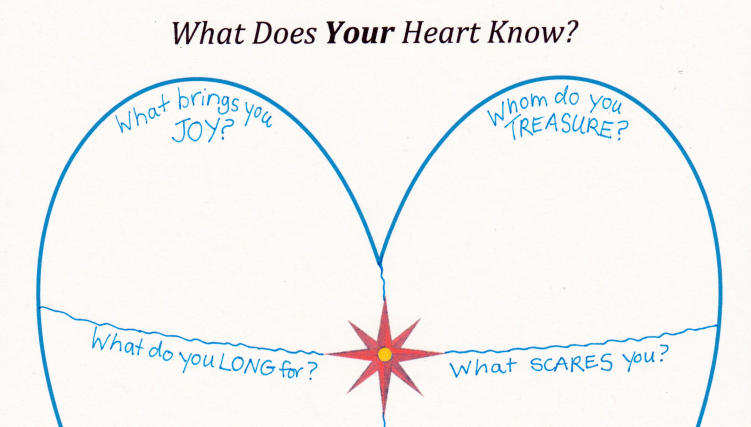
We both reached out to Joyce Sidman to share our ideas and see if she would like to meet our students to kickoff the heart poem project.  Not only did she say yes, she pointed us toward a great graphic organizer on her website that would help our students figure out what their heart knows. www.joycesidman.com books what the heart knows chants heart worksheet.pdf.png
IMG_2512.JPG

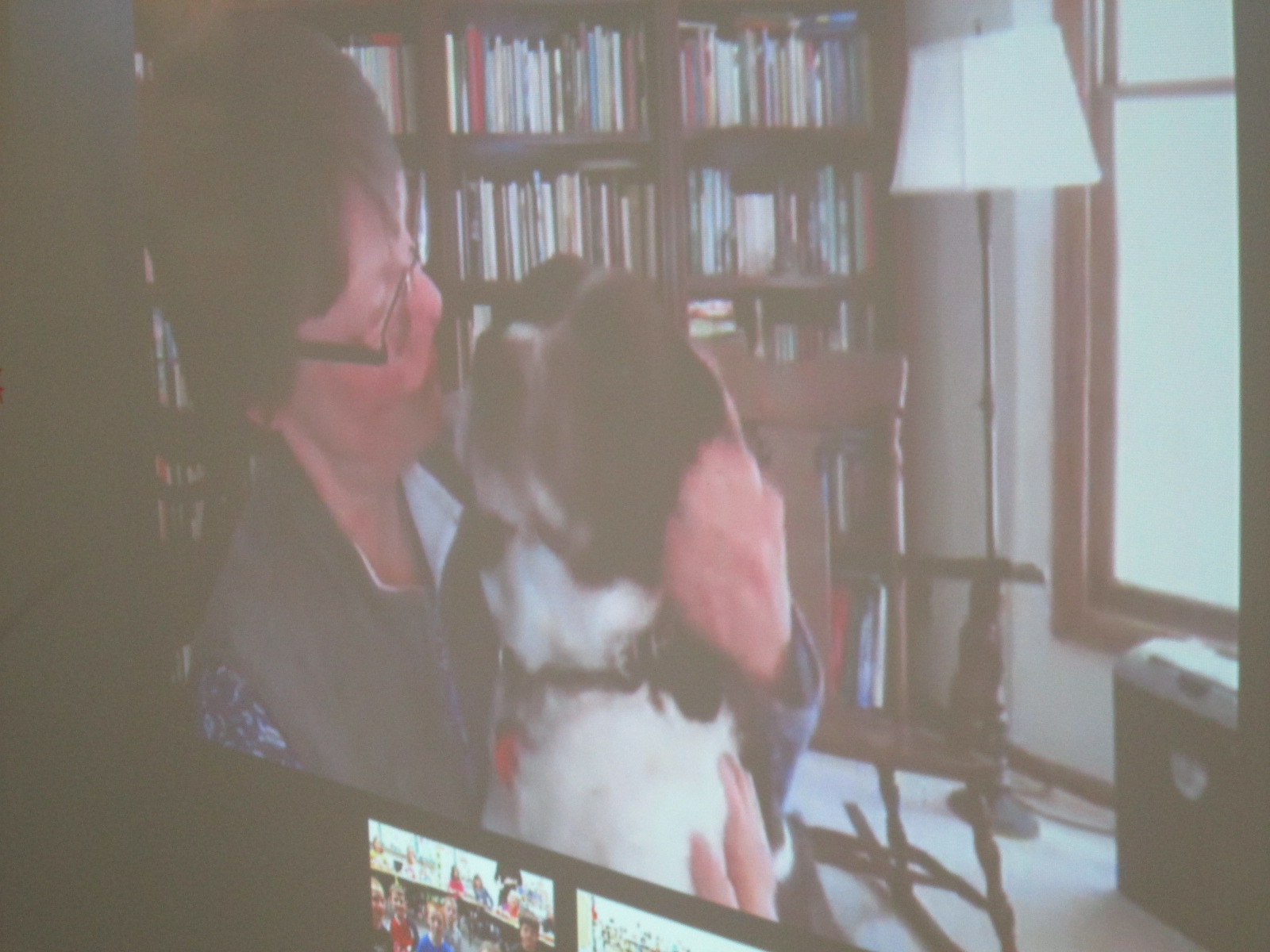
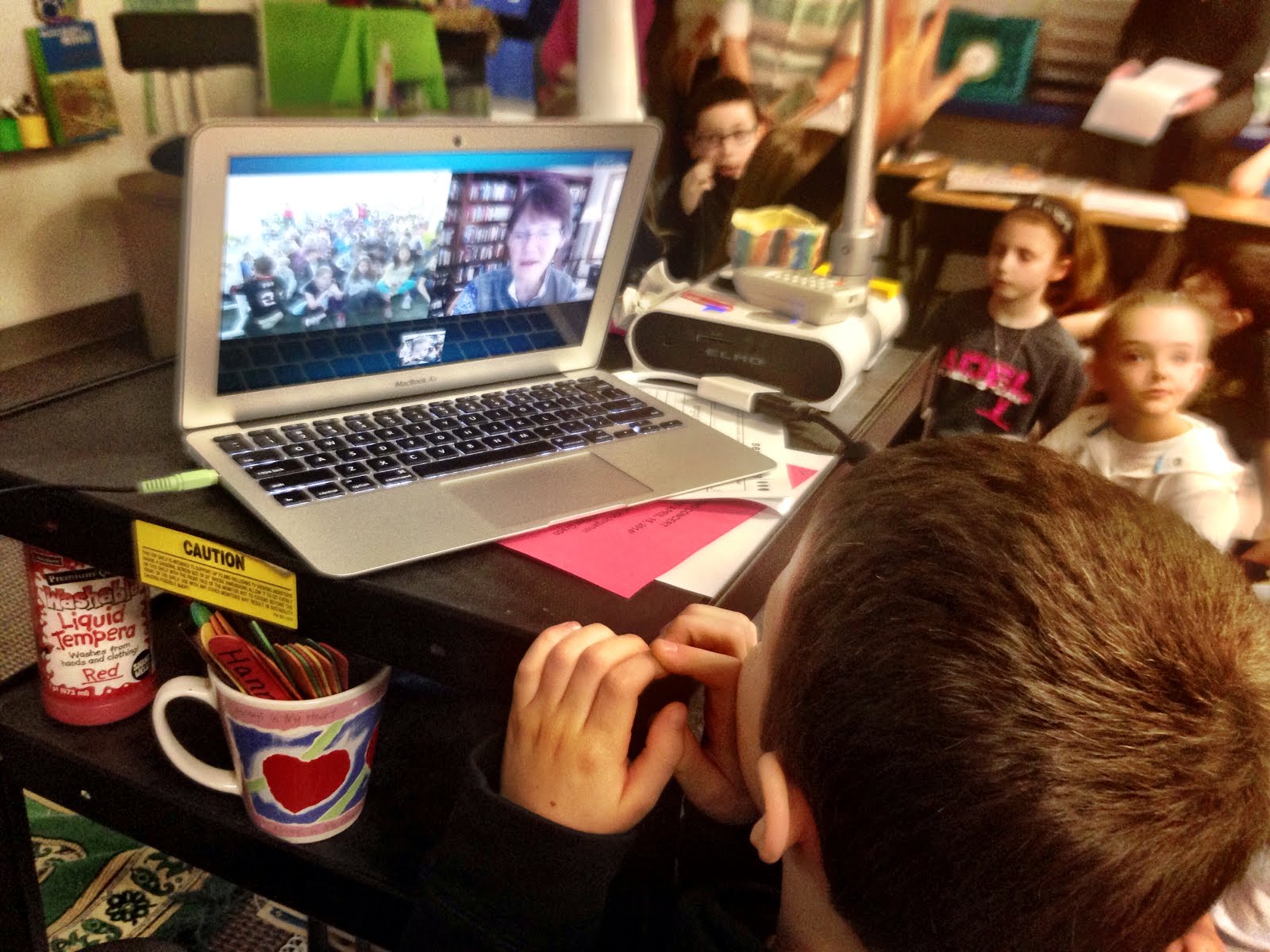
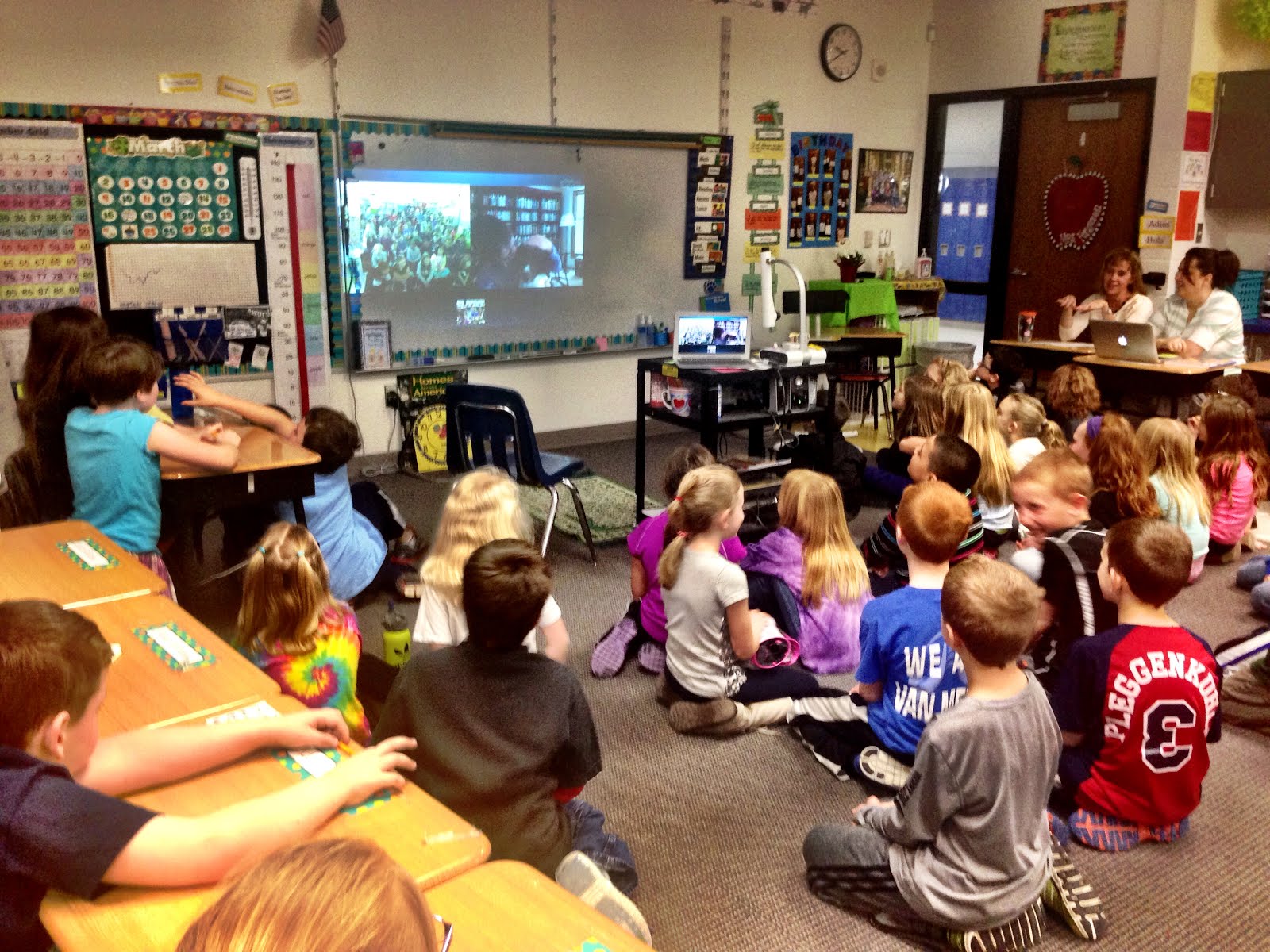
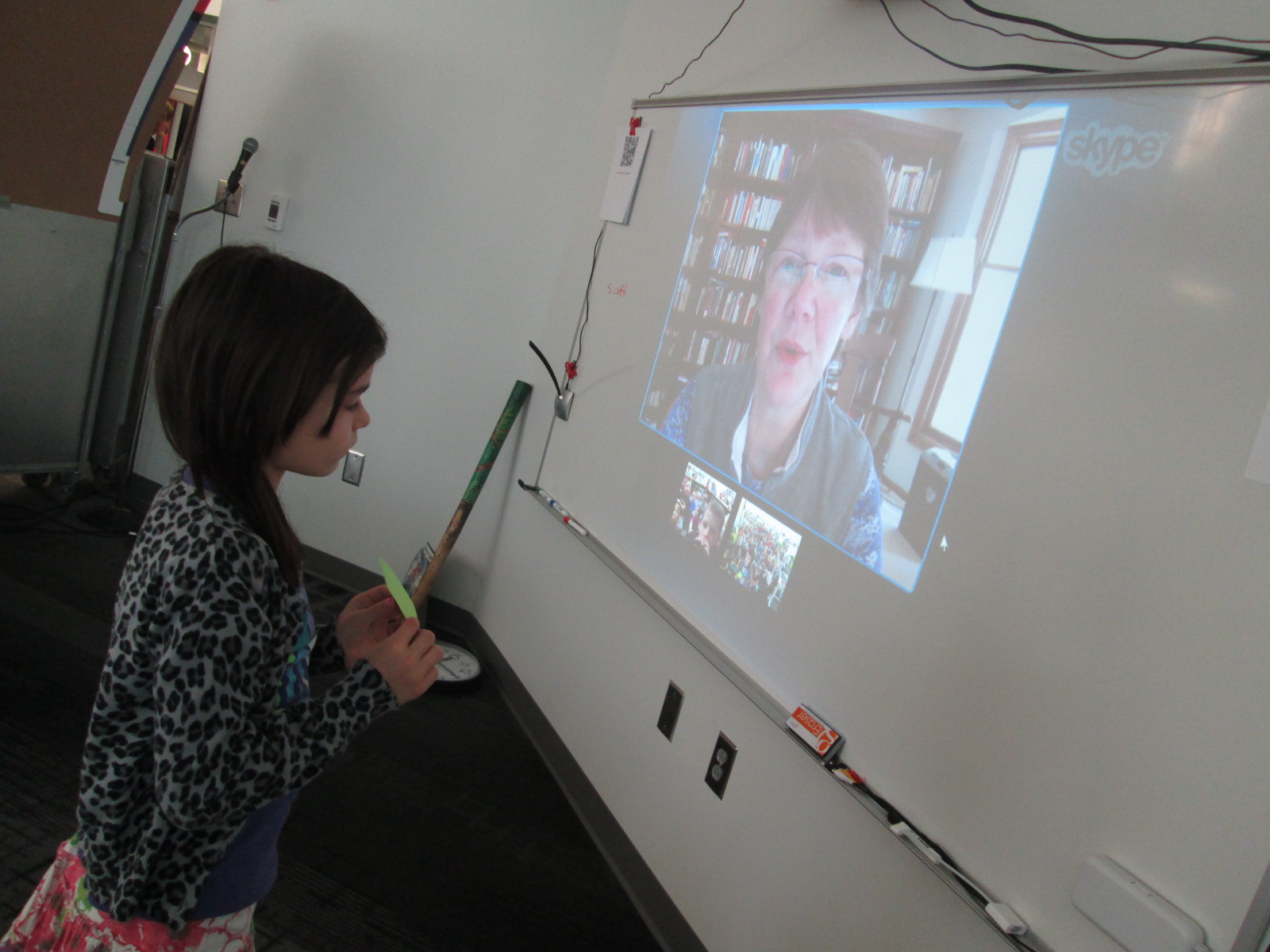
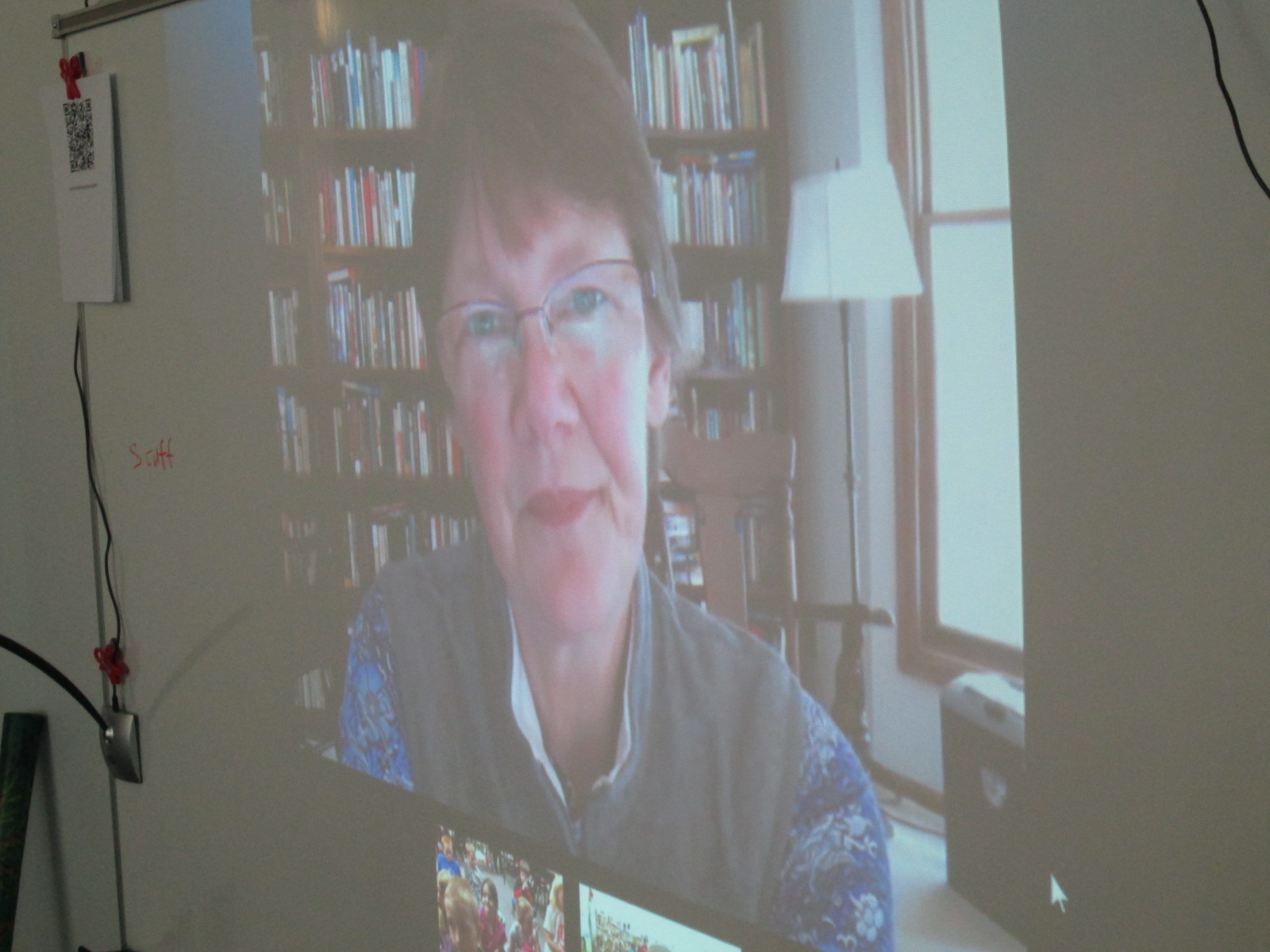
Today our students in Athens, Georgia and Van Meter, Iowa came together with Joyce Sidman via Skype.  After a quick hello and meeting her dog, she read the poem, “Blessing On the Smell of Dog”.  She reminded us that when she is with her dog, she feels like she is home.

This setup the idea that poems come from what he hold in our hearts whether it’s joy, treasures, things we long for, or even what scares us.  Joyce spent time walking through each question on the graphic organizer and giving examples of what the question means to her and why it’s important to think about all of these emotions we hold in our hearts, even the feeling of being scared.

She encouraged our students to write from their hearts.  She also connected with our Banding Together project.  She said, “You’re helping form a bond between you and kids in another part of the world.”
IMG_2519.JPGIMG_2448.JPG

Our students were able to ask her some questions at the end of our Skype.  When asked why she writes poetry and not other kinds of writing, Joyce said, “I notice the things that are happening around me and I celebrate them.  Poetry allows me to focus on that one thing”.  IMG_2523.JPGIMG_2450.JPG
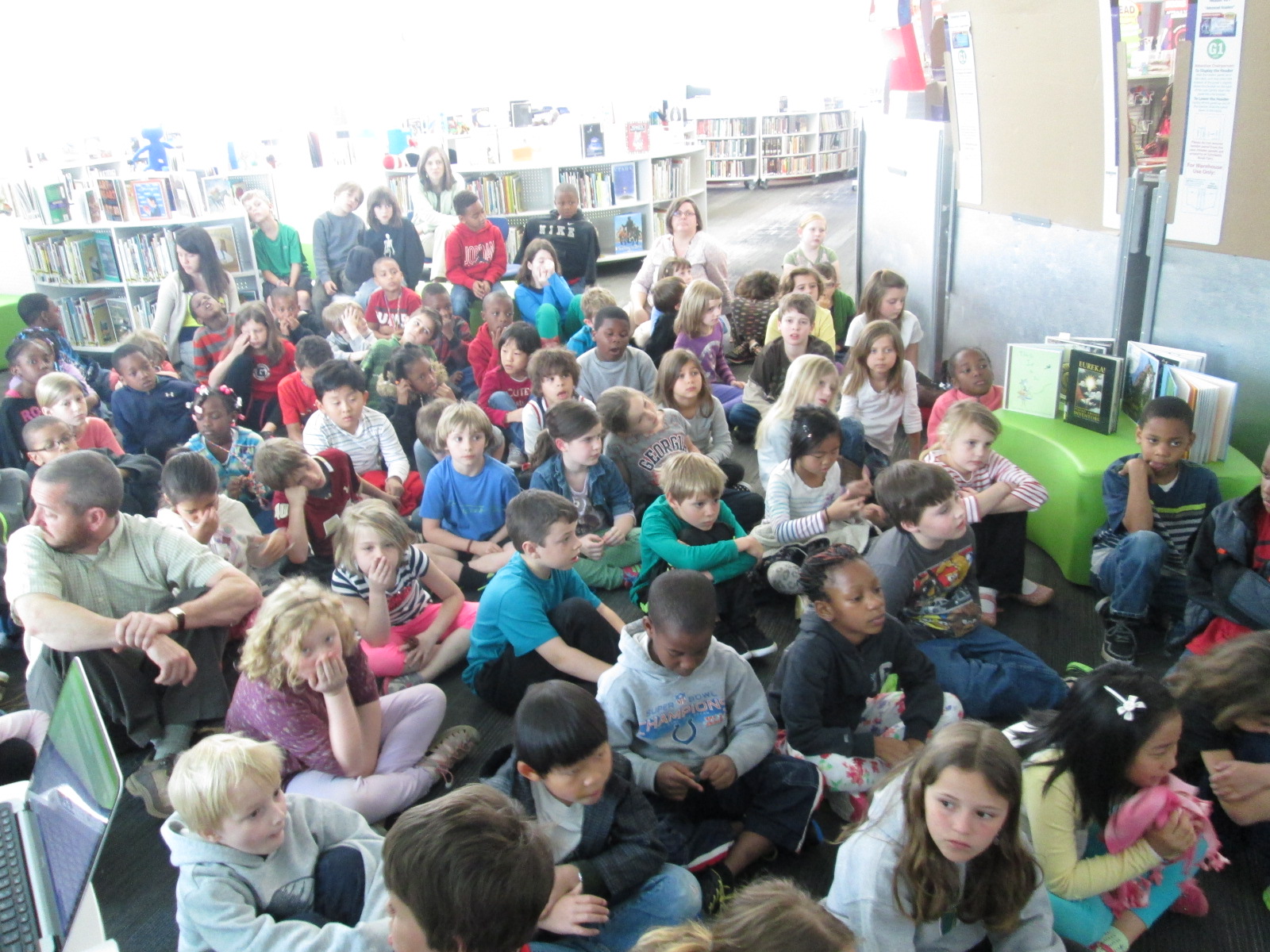
She also told our students, “Even if there are times when you don’t write, you can always go back to writing from your heart.”

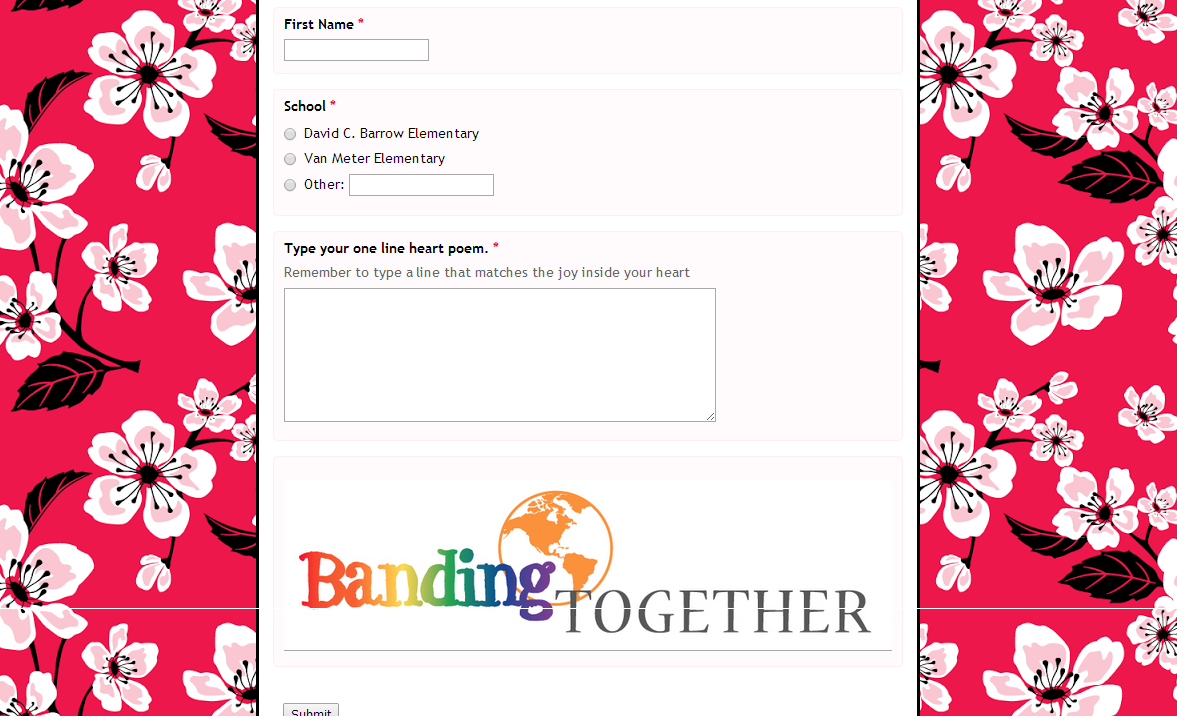
Our students left this experience eager to begin writing heart poems to attach to our Rainbow Loom bracelets.  They will fill out the graphic organizer and then submit their poems using a google form.
Heart Poems.png

Students can quickly get to this form from Symbaloo or by scanning this QR code.
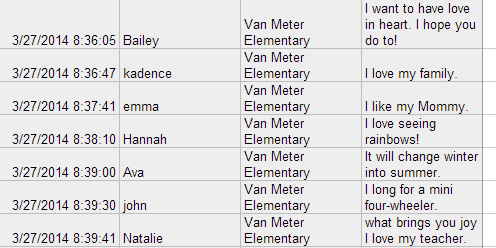
Poems will go into a spreadsheet when they are submitted which will allow us to easily print them and attach to our bracelets.  Heart Poems  Responses .png
We invite you to join us by submitting your own heart poems.  Use Joyce Sidman’s great graphic organizer and have your students submit their poems in our Google form.  We’ll attach them to bracelets that we have as well as share them with other special friends in coming months.  You can also use the hashtag #heartpoems to share some of your poems on Twitter.
IMG_2526.JPG

Thank you, Joyce Sidman, for inspiring this special addition to the Banding Together project, and thank you for taking time to connect with our students.


Kindergarten Blokify Creations Becoming Reality with Makerbot

blokify printing (1)Today, Mrs. Kelly Hocking brought her Kindergarten class to the library to begin 3D printing their creations that they made with the Blokify app on iPad.  It has been a few weeks since they made their creations.  After they left the creating session, 5th graders helped email all of the files to me.  We put them into Makerware, made them smaller, and sliced the files for 3D printing.  All of the files went onto the SD card to be ready to print.

blokify printing (4)

Today, they all sat in front of the 3D printer.  We spent some time talking about what a 3D printer is and looked at some of the creations it had made.  We also talked about the safety of not touching the printer while it is printing due to the heat and the fact that bumping the printer could mess up the print.

blokify printing (3) blokify printing (2)

Finally, we cued up a file on the screen and the student came up to press the M to start the print.

They loved watching the build plate raise to the top.  There were even oohs and ahhhs as the printer was heating.  Once the printing started, we let one student at a time come up to peek inside and see what 3D printing looks like.  They were all amazed.

Mrs. Hocking is working with all of these students to stretch their imaginations.  They are going on a virtual field trip to Boston over the next few weeks and along the way they are virtually stopping in each state and learning something about that state along the way.  For example, next week we will read the book Suryia and Roscoe: The True Story of an Unlikely Friendship and visit the sanctuary where they live in Myrtle Beach South Carolina.  Mrs. Hocking is having the class imagine packing a virtual suitcase that they can put anything in.  Today, they want to add the Makerbot to their suitcase.

These students are also planning out imaginary gardens in their minds.  Their Blokify creations will eventually find a spot in those imaginary gardens and students will imagine what it’s like to go inside of their Blokify creations.  They will create art and stories to accompany these 3D printed sculptures in their imaginary gardens.  I always love the imagination and creativity that Mrs. Hocking brings to life in her classroom.

blokify printing (6)

Over the next few days, the Blokify creations will continue to be printed until all 21 are done.  Then, the imagination and creating of stories will begin.


Letting Kindergarten Imagination Soar with Blokify and Makerbot

blokify (4)Mrs. Kelly Hocking’s Kindergarten class just started a collaborative project with the art teacher and the media center.  Her class has been very inquisitive about structures and sculptures and what it’s like to be inside of those structures.  For example, they’ve looked closely at the Statue of Liberty and they are fascinated with the idea of going inside and looking out from the crown.  In art, Mrs. Foretich is introducing maquette sculpture which is a small scale model of a rough draft or unfinished work.  It allows them to test how different shapes are put together without making a full sculpture.

blokify (10)

These 2 ideas started coming together in a project.  Mrs. Hocking started exploring Minecraft at home and thinking about how worlds and structures were created in the virtual world.  Then she started wondering how this might flow into the discussions her class was already having about imagining and going inside of structures.  This is when we started talking about Blokify as a tool for putting together blocks to create a larger structure.

Mrs. Kelly, the art teacher, and I all met to brainstorm.  Students will eventually build a larger sculpture out of shapes in art.  Their art standard is:

GPS: Demonstrates that shapes can be put together to make new shapes or forms.

Their essential question is:

How do artists build Sculptures?

We decided that we would start our journey with Blokify.  Blokify is a free iPad app that allows students to put a variety of blocks together to build pretty much anything and then 3D print that shape.  The files can be emailed for download into your own software for 3D printing conversion.

We decided that Blokify would be the kickoff to this larger project.  In the library, Mrs. Foretich, our art teacher, showed students some examples of maquettes and talked about how artists might make a rough draft of a larger sculpture to test some things out before making a larger sculpture.  Then, we showed students some images from Blokify’s facebook page to give students the idea that you don’t just have to make a box in Blokify.

photo 1 photo 2 photo 3


After that, students went straight to iPads and jumped in.  We didn’t spend a lot of time “teaching” them how to use the app.  Instead, we let them explore.  We also didn’t tell them what to build because we wanted them to have permission to imagine and dream as they built.  Mrs. Foretch and I walked around to tables and showed students some tips as they worked.  For example, if you hold your finger on a block it will disappear.  If you pinch the screen, you can zoom in and out.

Two of my enrichment cluster students came to support students as they worked, too.  Monica, 5th grader, and Grant, 3rd grader, were naturals at nudging Kindergarten students along without doing the work for them.  We were almost able to have a helper at every table because of them.  I was so glad that their teachers allowed them to come and share their expertise with Kindergarten.

Some students started really being strategic about where their blocks went in their structures while others liked tapping all over the screen and seeing how it turned out.  We did question a bit if we didn’t give student enough guidance, but we ultimately decided that they really needed this time to explore.  If our prints don’t quite turn out like they hoped, then it will be a learning experience about how they might rethink their own approach to designing.

blokify (13)

As always, there were some wonderful moments that happened.  One moment was when  a student who we’ve all been trying to find the right learning method was thoroughly engaged.  He was so proud of the work he did, and he showed us a way to connect with him as a learner.  I  hope that this new discovery will lead to other projects and learning experiences for him in his classroom.

blokify (6)

After students left, I had a group of 5th grade helpers email me all of the files from the iPads.  I put each file into Makerware, resized it, and saved it onto an SD card for printing.  We will print our designs after spring break.

blokify (3)

Once designs are printed, Mrs. Hocking wants students to put their structures on a piece of paper and draw the rest of the setting around the structure.  From there, students will think about the inside of their structure as well as the surroundings and begin to tell a story about their creations.  We aren’t sure yet how that piece will be captured, but I’m excited about the possibility.

In art, Mrs. Foretich will continue to explore this standard by expanding what students are building.


Kinetic Art Sculptures Using Our Makerbot Replicator 2

kinetic sculpturesOur art teacher, art student teacher, and I have been having a blast with 3rd graders designing kinetic sculptures.  About 2 weeks ago, students came to the library during art to learn about Tinkercad and how artists use technology to create.  Before this lesson, they watched a Tinkercad tutorial.  In small groups, they designed an object for 3D printing.  Whatever they designed would become one piece of a larger kinetic sculpture in art.  You can read more about that experience here.  

kinetic sculptures (15)

Once students finished their design, I went into each account and tried to double check that the designs were all pushed together into one piece art.  Then, I downloaded the .stl file into Makerware.  In Makerware, I resized the object to a smaller size to speed up the printing process.  I also added a raft (removeable base) and supports to each print.  I’ve found that in Tinkercad these 2 steps are needed because what you see on the computer screen might actually be misleading.  The raft and supports help the 3D print be more stable.  All files were loaded onto the SD card prior to students arriving.

kinetic sculptures (9)

Ms. Foretich, art teacher, created a printing schedule with about 60-90 minutes between prints.  During each time frame, students came to the library and chose their filament color.  Then, I shared some information about the 3D printer since it was the 1st 3D print for most students.  Finally, we pulled up the file on the SD card and a student pressed the M.  Students sat in chairs or huddled around the printer to watch.  After watching the print for a few minutes, students went back to their regular day while the print finished.  I kept an eye on each print during and between my lessons.

kinetic sculptures (13)

Each printing experience was different and you really never know what is going to happen when you press that red M.  Many times the print is a big success, but sometimes it’s not.  We’ve had some failures, which are very important.  We save every failed print we have and put it in a box.  It reminds us that we aren’t perfect, but it also serves as an instructional tool to talk to students about what didn’t work.  We learn from our failures and a box full of failure speaks volumes to all of the students who are starting their 3D printing process.

fail

When a print fails, we go back into the design and look at what needs to happen.  Sometimes it’s as simple as pushing some pieces together more than they were.  However, sometimes it’s a big flaw that cause students to just start over.  It certainly slows the process down, but it is important for them to revisit their work, revise, and try again.

kinetic sculptures (7)

It’s always fun to see which students are motivated by the concept of 3D printing.  Sometimes the students make surprising choices like giving up their recess time to spend that time watching the 3D printer create.  Hearing their “wows” and “cools” is inspiring.

jaymar

Students are continuing to print their pieces this week and next.  In the meantime, they are continuing to work on their kinetic sculptures in art knowing that their 3D printed object will also be a part of their design.


Connecting Libraries: Using Tinkercad with Students in Van Meter, IA

Hanging out in Iowa from my kitchen!

Hanging out in Iowa from my kitchen!

I had so much fun today spending some time in Van Meter, IA from my kitchen.  Shannon Miller and her students just received their Makerbot 3D Printer from Donors Choose.  Her students are starting an Olympic project where they will be designing new symbols for the Olympics.  Students will eventually use Tinkercad for their designs.  Since this is a new tool for her students, Shannon thought it would be a good idea for us to connect and share what we’ve learned.  I had a group of 5th graders eager to share their expertise, but the GA ice and snow caused us to be out of school today.  Rather than keep her students waiting, I went ahead and shared my own learning about Tinkercad.  We plan to reconnect when we are back in school so that students can share.  I’m sure that her students will have just as much to share with mine by the time we reconnect next week.

Here’s our Google Hangout from today:

After the Hangout, I realized that I forgot to tell them an important step, so I made a quick screencast to fill in the hole I missed.  I also share with them the steps that wouldn’t screen share through hangouts.

It was wonderful to be a part of another library.  We all have expertise to share, so why not share beyond our walls.  Happy making, friends!

Our Miraculous Start to 2014 with Flipgrid

miraculous flipgridIn the new year, I wrote a post about expecting the miraculous in 2014.  I can honestly say that the expression “Expect the Miraculous” has taken on a life of its own in our school.  Let me tell you how it happened.

To kickoff the second half of the year, we held a schoolwide assembly.  The purpose of the assembly was to review goal setting, celebrate our unique talents, and to give ourselves permission to have dreams.  It really was an amazing assembly.  We had student performances, a teacher who played her violin, a youtube video from Kid President, and Martin Luther King Jr contest winners.  The assembly was also a space for me to talk about expecting the miraculous.  I read the excerpt from Flora & Ulysses: The Illuminated Adventures.

“All things are possible,” said Dr. Meescham.  ”When I was a girl in Blundermeecen, the miraculous happened every day.  Or every third day.  Actually, sometimes it did not happen at all, even on the third day.  But still, we expected it.  You see what I’m saying?  Even when it didn’t happen, we were expecting it.  We knew the miraculous would come.” ~Kate DiCamillo

I also shared synonyms for the word “miraculous” such as “extraordinary”.  Finally, I told my own story of expecting the miraculous.  My story involved our new 3D printer.  From the day I heard about 3D printers, I expected that one day our library would have one.  I wasn’t sure how or when, but I felt in my heart that this incredible piece of technology was something our students should have access to in school.  About a year ago, our district considered purchasing a 3D printer for our school.  It was all the way down to the ordering process, but something happened over the summer and it didn’t get order.  Still…..I expected the miraculous.  I wrote grants and began advertising the idea of purchasing a 3D printer.  I publicized that a portion of our book fair profits would go toward 3D printing.  However, this was a slow process and I knew it would take time to raise almost $3000 for a printer and supplies.  Still….I expected the miraculous.  Then, in October, Makerbot announced their partnership with Donors Choose.  I immediately submitted my project and hoped for the best knowing that much of the available funding would most likely go to Brooklyn schools.  Still…I expected the miraculous.  Miraculously, our printer was funded overnight!

This is the story that students heard.  I followed this with an invitation for them all to “Expect the Miraculous” with me.  To capture our goals, dreams, wishes, and expectations for 2014, I created a Flipgrid.  I gave them a quick tutorial on how to record a video into the Flipgrid by walking them through screenshots of the process.  Then, I setup a Flipgrid recording station in the library.

Flipgrid station Over the past 2 weeks, students have written about their hopes and dreams in class and visited the library to record.  It has been an amazing process to watch.  Goals have ranged from reading goals to behavior goals and from school-related to extra curricular related.  I encourage you to spend some time listening to their miraculous expectations and feel free to click the + and add your own.  Students have enjoyed coming into the library and listening the the videos on our touchscreen computer at the front of the library.  I can put the Flipgrid on slideshow and it flips through each video throughout the day.

IMG_1810[1]

I’ve heard so many kids, families, and teachers using the word “miraculous” in conversations.  Some students have even recorded their videos at home with their family.  Our school embraced the phrase so much that we even put it outside on our sign.

miraculous

One more miraculous thing happened.  Kate DiCamillo posted an opportunity on her facebook page to ask questions about her books.  I asked, “What miraculous things have you expected that actually happened and what miraculous things are you still expecting?”  Here’s her reply!

Miraculous