At our “Meet the Teacher” night back in August, several students raced into the library to tell me about project ideas that they dreamed up over the summer. As soon as I heard their enthusiasm, I knew that one of my library goals, “To empower student voice”, was going to be an important one for this school year. One student shared about his idea to design his own Skylanders and 3D print them. Another wanted to create a set of model trains on the 3D printer. Another wanted to explore the MaKey MaKey. and program things. I told them all that we would figure out how to make this happen this year, but I needed some time to get the library going.
As usual, the start of the school year has been busy getting projects, lessons, and technology off the ground, so I had not gotten back to these students. I just love when students feel comfortable to raise their voices. I received an email a few days ago from two students that went something like this:
Dear, MR Plemmons
We would like to come to the makerspace once a week during recess if possible. We would love to use the makey makey to possibly control Sphero. If this is possible please email back.
I knew I needed to make this happen fast because I had already waited too long to let these guys start tinkering, so I responded back:
When is your recess and what day are you thinking of? I want to make this happen for both of you.
And then they responded back with the day, time, and:
Thank you for giving us this opportunity.
The first day of tinkering was just awesome. Within a matter of minutes, Kearn had the MaKey MaKey connected to Play Doh and was controlling a train simulator on the computer. Ludwig controlled the horn and Kearn drove the train. Kearn wanted to make a video to show what he had done, so we pulled out an iPad and made an impromptu video which he wanted to add to his Youtube channel. He also started following my blog and even left a comment about how much he loves the makerspace. Both students were completely independent and were perfectly capable of dreaming, tinkering, and making on their own. I was available for support as needed, but they really just wanted a space to explore. As they continue, I want to connect them with some experts that might mentor their ideas and curiosities, but for now, they just need to tinker.
This is what I’m talking about when I say “empower student voice”. These two guys are full of energy and passion about making. I am sure that they will figure out so many things that I couldn’t even imagine myself during the course of this year. They willingly share their knowlege and expertise, and I’m sure that their tinnkering, failures, and successes will inspire and support many other student projects during the year. When I see two students get so excited about learning like this, I can’t help but think about what other opportunties students need to spark their own passions for learning. I hope that our makerspace is just one space that ignites students’ curiosities this year.
Last year, a book impacted my life, my library program, and found its way into so many conversations with students, teachers, and librarians. “Expect the Miraculous” came to be our mantra in the Barrow Media Center thanks to Flora & Ulysses: The Illuminated Adventures by Kate DiCamillo. It was all thanks to p. 130-131.
This summer, as I sat down to develop our library program goals for the 2014-2015 school year, that mantra of expecting the miraculous everyday was still a big part of my thinking. However, this summer I carried so much more with me as I reflected on goals.
I had the moonshot thinking and action plan of the Google Teacher Academy and becoming a Google Certified Teacher.
I had the Invent to Learn Workshop with Sylvia Martinez and Gary Stager.
Photo credit: Sue Levine
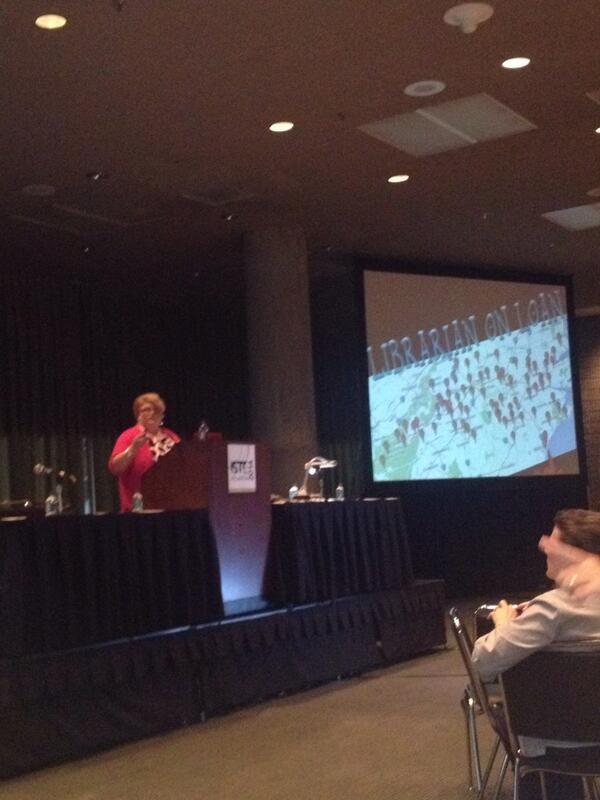
I had numerous experiences at the ISTE 2014 conference including a zombie fighting keynote from Jennifer LaGarde, empowering talks from George Couros and Todd Nesloney, and inspiring keynotes from Ashley Judd and Kevin Carroll about the importance of each child’s story and the importance of play.
The more I reflected on my summer professional learning experiences the more I realized that I wanted this year’s goals to be different. In the past, I’ve made big goals about developing the participatory culture in our library, but I’ve also made specific goals about the collection. While the collection is important, it is not my primary focus for the library program. I was reminded of a question in Jennifer LaGarde’s keynote about the Dewey decimal system and her answer of “who cares”. Who cares if I have specific goals about the library collection? What cares if the 300’s have the recommended number of books? Who cares what the average age of the biographies is? The heart of the program isn’t the physical collection. The heart of the program is the students, the teachers, the families, and the community. The heart of the program is the opportunities that they have through the library. Now, I’m not saying that I’m abandoning the collection or that I don’t have goals about the collection. It’s just that my primary goals of the library aren’t about the collection.
I want goals that I can carry with me into every collaborative meeting that I attend. I want goals that I can put up on the walls of the library and add tangible evidence throughout the year of how they are impacting the students, teachers, and families in our school. I want goals that support our school and district goals as well as reflect what is being talked about on a global level.
This week, I will share these goals with our faculty during pre-planning, but they’ve already faced their first test. During our first day of pre-planning our principal set the stage for our year. I must say that it was one of the most inspiring opening days that I’ve ever been a part of because it wasn’t filled with duties and responsibilities, mandates, and daunting changes. Of course, all of those things will be present this year, but our principal chose to focus on how we can value each child’s story, how we can add to and enhance that story by what we offer at school, and how we can develop a vision and mission for our school that represents what we truly believe in education. As I listened and as I talked with other teachers, I was already carrying my goals with me, and I must say that I felt really good about the 4 goals that I’ve chosen.
These are the goals that are based on the themes that consistently surfaced in all of my reading, professional learning, conversations, and reflections.
Goal 1: To provide students, teachers, and families opportunities to dream, tinker, create, and share
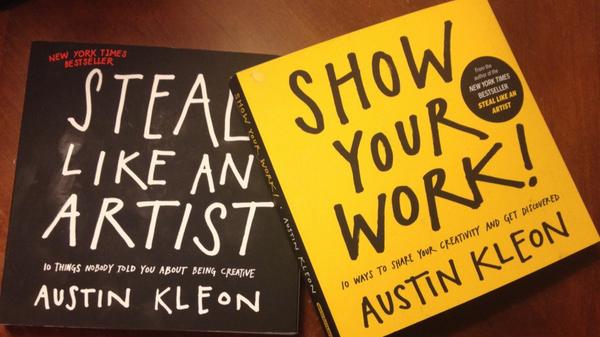
I chose these verbs carefully because I think that the order matters. So often, we feel the time crunch in education and I think we often jump to having students make something with so many detailed requirements that they don’t have time to dream about what they hope they could make or have time to mess around, fail, and learn from those failures. As I plan projects with teachers this year, I want to intentionally plan spaces for students to pause and wonder and have time to explore before they actually create a final product that is shared with an authentic audience. I want us to think carefully about how we “show our work” just as Austin Kleon outlines in his books. He says, “If your work isn’t online, it doesn’t exist.” I’ll be thinking carefully about how we give students opportunities to create and also how they share their process as well as their final product.
Within this goal, I have subgoals about the number of large-scale projects I will do with each grade level, the development of our library makerspace, the collaborative relationships with our community makerspace and tech startup, and embedded digital citizenship.
Goal 2: To engage in global thinking and global collaboration
I can’t even count the number of times that global thinking and collaboration came up this summer. I feel like so many people around the world are primed and ready for this endeavor during the upcoming year. Last year, our library was more connected than it has ever been through authors, guest speakers, reading events, and peer feedback through Skype and Google Hangouts. Even though we felt connected, most of our work was projects or single connections. I would love to see global thinking and collaboration become more evident in what we do through long-term collaborative relationships around the globe and authentic questions and projects that matter to the world. Within this goal are the many networks that I will be a part of this year including GlobalTL, Connected Classroom, Skype in the Classroom, and my Twitter PLN. I’m inspired by the work of Sylvia Rosenthal Tolisano and will look at her work as we plan this year.
As teachers and I plan this year, we will ask ourselves how we are being global thinkers and how we are connecting our students beyond the walls of our school.
Goal 3: To empower student voice
When I thought about this goal, I was reminded of many stories shared by George Couros at ISTE including the story of a little boy who made a video where he overjoyed by getting one “like” on a social media post. I was reminded of Todd Nesloney sharing about his math fair and how he asked students to “wow” him by showing their math knowledge. Students did more that “wow” him. They shared their passions in life, involved their families, and were empowered. I was reminded of how we all want to be heard and feel like we’ve made a difference. As I plan with teachers this year, I want to ask how we are empowering each student by allowing them to share their passions and feel that their voice is heard. In the library, I will continue to explore this as well by giving students opportunity to document our year, make decisions about library resources, share their passions through contests and displays, pass on their expertise through co-teaching experiences, and listening closely for opportunities I don’t even know about.
Goal 4: To support the reading habits and curiosities of students, teachers, and families
It’s no secret that the more you read the better reader you become. You of course need to have the skills and strategies to accompany that time commitment. You also need access to reading that matters to you. This year I want to be more intentional about supporting reading curiosities to match students, teachers, and families to the kinds of stories and information they are looking for. I also want to be more intentional about documenting that commitment to reading. Our library is not the only source of reading materials, so I want to continue to build a collaborative relationship with the public library, local bookstores, and other community resources to all work together toward a common goal.
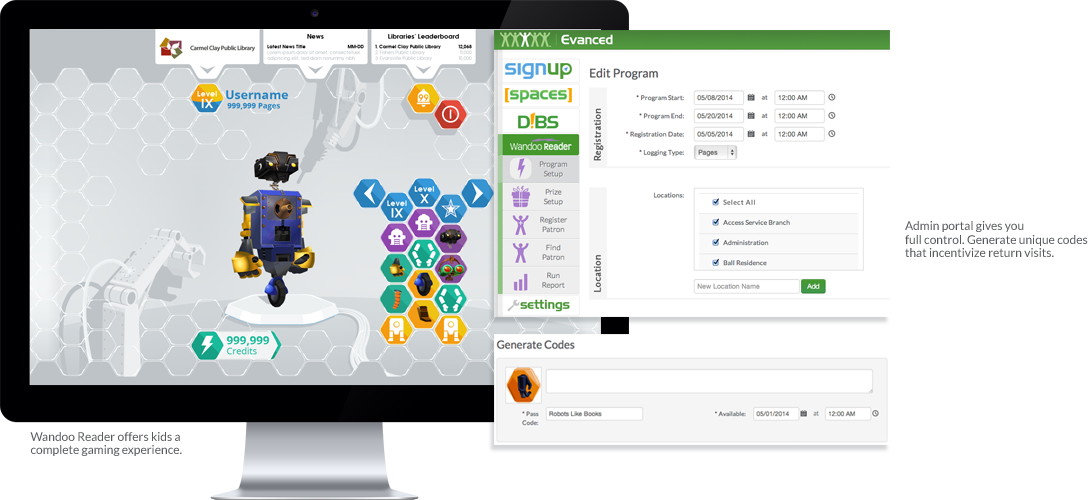
This year, we will explore an Evanced tool called Wandoo Reader. This tool will give students a portal for documenting their reading lives through tracking book titles and minutes read. Along the way, there will be challenges issued to students, and within Wandoo Reader, they will earn pieces to a robot that they will customize. I hope that this tool will offer a level of engagement for tracking reading as well as encourage students to spend more time reading in multiple ways from multiple locations.
Our planning will begin this week and I look forward to carrying these goals with me, trying them out, and see what miraculous things happen this school year.
What are YOUR library goals? I invite you to think about them in new ways and share.